| Issue 101 | 31 August 2026 |
Issue 101 | 31 August 2026
|
From the Board of Directors
|
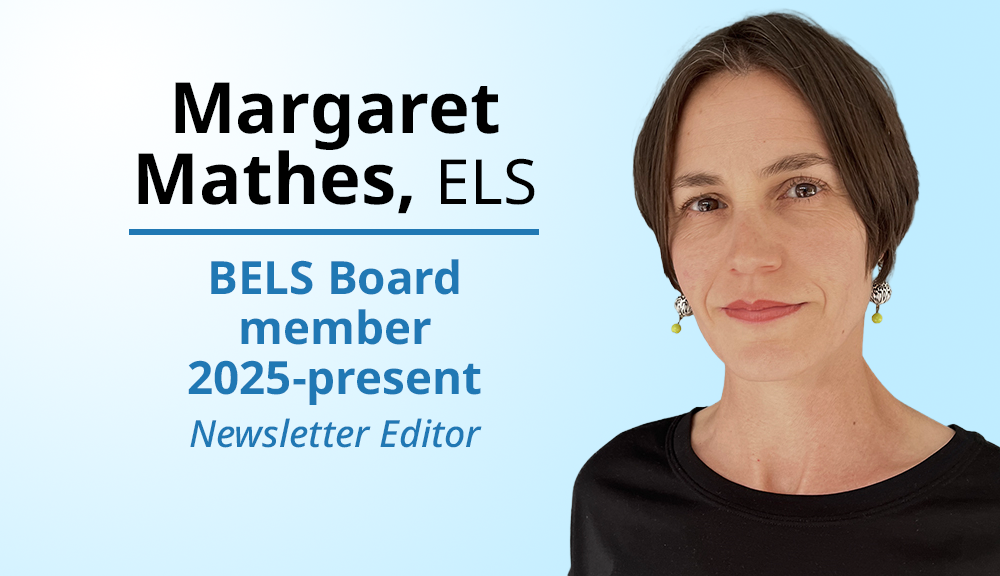
I want to introduce myself as the current editor of The BELS Letter, a role I assumed earlier this year. I have been on the BELS Board of Directors since January 2025. I knew BELS had a lot to offer before I became a Board member; however, it wasn't until I joined the Board that I fully understood the rich nature of the community we have and the need for this community to connect with and support each other. My hope is that the contents of this issue give you a similar understanding too.
|
One of the biggest topics of conversation since I joined the Board has been around the role of AI in editing. Many of us feel pressure from employers or clients to incorporate AI into our work—edit faster, charge less for the same work, increase the quality! After having recently built two AI tools for my team of editors to use in our work, I see both the benefits and the pitfalls of partnering with AI in scientific editing. Using AI has increased the consistency in the work I do (and humbled me because I realize that I don't catch everything!), but accepting the AI output without full human review and verification puts the integrity of what we do—and our profession—at risk.
This leads me to my next introduction: below you will find the first BELS Tech Corner. This will be a regular piece providing our members with useful tips, tricks, or updates about using tech in editing, be it AI or software like PerfectIt. Celia Nelson, who received her ELS in 2022 and serves on our Marketing Committee, will you bring you this piece regularly. Our hope is that the Tech Corner will inspire confidence as you engage with new tools and will foster good conversation on [email protected].
Speaking of AI, here is another introduction: the updated BELS Code of Ethics. Our Code of Ethics is not new, but the Board has introduced a few changes, including disclosure about the use of AI. See the article below for more information on these updates.
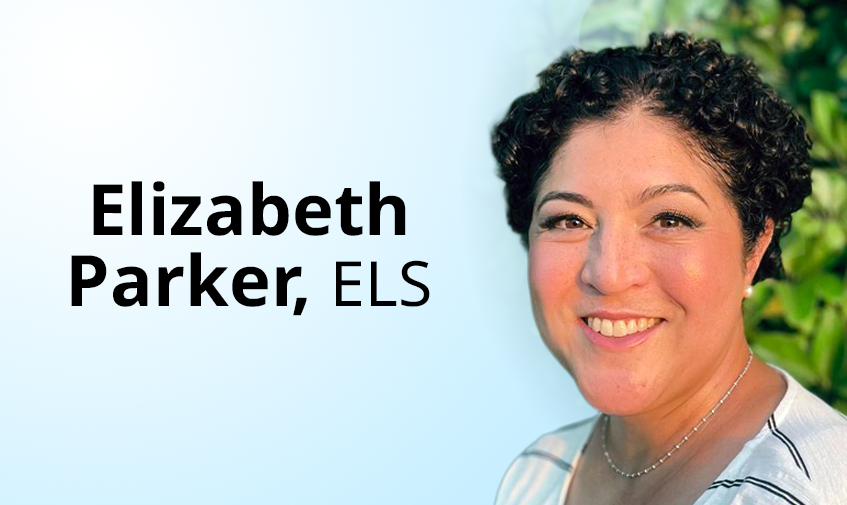
And I cannot mention the updated Code of Ethics without one last introduction. That distinction goes to Elizabeth Parker, who partnered with the Board of Directors in making these updates. Elizabeth is also featured below as the first recipient of the Professional Development Scholarship Award. As part of this inaugural award, Elizabeth has provided a recap of her time at the Council of Science Editors meeting in May. Please join me in congratulating Elizabeth on this honor. And happy reading!
—Margaret
|
Tech Corner: Using AI in Writing by Celia Nelson
|
As one of my LinkedIn peers, Patrick Schafe, commented in a post, “The infrastructure of scholarly trust…is being outpaced by AI.” The systems that validate knowledge—peer review, provenance, impact metrics—are lagging behind the speed and scale of AI‑generated content.
In a test of 13 major large language models (LLMs), all were found capable of either committing academic fraud or facilitating junk science. Even the most “responsible” models can be coaxed into producing fraudulent material, while others generate it with minimal prompting.
Public trust is also at stake. In April, scientists invented a fake disease—Bixonimania—and watched as AI chatbots warned users about its symptoms and risks.
TheNew York Times reviewed The Future of Truth, a book about what AI is doing to veracity. The review reported on more than a half‑dozen misattributed or completely fabricated quotes, leading the writer and editors of the book to “thoroughly review and quickly correct any affected passages.”
Research integrity has become a dominant concern, “a direct and alarming consequence of AI’s impact at the submission and writing stages of the publishing process,” according toTrends in Academic Publishing. Publishers are modernizing systems and workflows as a result, but it is all part of a bigger picture that “signal[s] movement towards the digital watershed.”
How we review, validate, and verify is a process derived from an earlier age. AI accelerates everything. The infrastructure for scholarly publishing wasn't designed for this velocity.
Full disclosure: I used AI to help me write this column, mostly to help me organize my ideas. Admittedly, I did not like much of the phrasing Copilot gave me; I think I am a better editor than writer.
|
2026 BELS Professional Development Scholarship Award
|
This year, BELS launched the Professional Development Scholarship Award. Those of you who have been BELS members for a while may remember this previously as the Executive Council Award. This is an annual award of up to US $500 to a BELS member to fund attendance at a professional meeting, workshop, or similar activity.
|
This year, Elizabeth Parker was awarded the scholarship. Elizabeth received her ELS in 2011. As part of her professional development, she attended the Council of Science Editors meeting in May and provided the below recap of her experience there.
Congratulations, Elizabeth, on this award, and thank you for your many contributions to BELS and the scientific editing community!
|
Conference Recap: Council of Science Editors by Elizabeth Parker
|
The Council of Editors (CSE) 2026 annual meeting was held in Durham, NC, on May 3-5. AI featured prominently in many sessions. AI-powered systems have been developed to help editors triage submissions, identify reviewers, and flag potential paper mill activity. Presenters from Kenya, India, Korea, and China discussed challenges for researchers and publishers in their countries. Ethical use of AI can, it was said, help level the playing field for researchers who use English as a secondary language.
Elizabeth Parker and Margaret Mathes, both BELS members, gave a talk about certification and certificate programs for manuscript editors. Because certificate and certification programs vary widely, attendees were encouraged to mention key elements of their credential instead of assuming that a potential employer or client will be familiar with it. When a hiring manager understands the value of BELS certification, it often becomes a deciding factor when they are comparing two otherwise similarly qualified editorial candidates.
|
Updated BELS Code of Ethics
|
The BELS Code of Ethics was updated by a working group of BELS members earlier this year. In July, the BELS Board of Directors approved the changes. The full Code of Ethics can be found online here. Here's a summary of the key additions:
- Principle 1: Editors should ensure proper disclosures, including the use of AI in their work.
- Principle 3: Editors should be proficient in the tools they use to edit, including AI.
- Principle 4: Editors should accurately represent their experience and qualifications.
- Principle 6: Editors should use best practices regarding cybersecurity.
- Principle 8: Editors should undertake their work with a spirit of generosity, contribution, and collegiality with the aim of mutual benefit toward colleagues current and future.
|
Congratulations to Our Newly Certified
BELS Editors!
|
In the most recent exam cycle, 4 editors passed the BELS exam to earn their Editor in the Life Sciences (ELS) certification. Congratulations to this group of editors!
|
- Wayson Jones
- Jesse McQuarters
|
Please visit the BELS calendar of events for the most up-to-date schedule and information about registering for events. (Note: all times below are presented in Central Time unless otherwise noted.)
|
- Macros for Life Science Editors: A Practical Introduction (professional development webinar): 1 September 4-5 pm
- Freelancing SIG: 16 September 4-5 pm
- Publications SIG: 24 September 4-5 pm
|
BELS Officers
Erica Goodoff, ELS(D)
President
Michelle Sauer Gehring, PhD, ELS
Secretary
Christine Wogan, MS, ELS
Treasurer
Stephen N. Palmer, PhD, ELS
Immediate Past President
Board of Directors
Stephen Bublitz, ELS
Chair, Professional Development
Wim DHaeze, PhD, ELS
Board Member at Large
Yateendra Joshi, ELS(D)
Chair, Distinguished Editor Exam Development
Lisa Kisner, ELS, CAE
Chair, Certification Maintenance
Kim Mankiewicz, PhD, ELS
Chair, Marketing
Margaret Mathes, ELS
Newsletter Editor
Leslie Neistadt, ELS
Registrar
Naomi Ruff, PhD, ELS
Director, Certification Exam Development
Sheryle Hazard, CAE
Executive Director (nonvoting member)
|
The Board of Editors in the Life Sciences (BELS) was founded in 1991 to evaluate the proficiency of manuscript editors in the life sciences and to award credentials similar to those obtainable in other professions.
Potential employers and clients of manuscript editors usually have no objective way to assess the proficiency of editors. For their part, editors are frustrated by the difficulty of demonstrating their ability. That is why both employers and editors so often resort to personal references or ad hoc tests, not always with satisfactory results. The need for an objective test of editorial skill has long been recognized.
To meet that need, BELS developed a process for testing and evaluating proficiency in editing in the life sciences. The Board administers two examinations—one for certification and one for Distinguished status. The examinations, written by senior life-science editors assisted by testing experts, focus on the principles and practices of scientific editing in English.
|
|
|